There is no such thing as a tidy national licence to cover cosmetic tattooing Australia in 2026. Put simply, the regulations that govern semi-permanent makeup of any kind, from lip blush to brows, are for the most part a matter of public health law at the state or territory level, and you will frequently have local council approvals to contend with as well. To be on the right side of the law one needs more than just a machine; suitable infection control training, a premises in order, insurance and whatever registration the council or health department calls for.
Most do not make that connection. I am Adelaide Crowe and those who have made the attempt to put tattoo rules head to head across Australia can tell you it is like being given three signposts to a track, each going its own way. Here I have assembled the 2026 facts in one spot, by state, to make plain what is in force in New South Wales, Victoria, Queensland, Western Australia, South Australia, Tasmania, the ACT and the Northern Territory.
What This 2026 Guide Covers
This is not some glossy brochure for the would-be cosmetic tattoo artist in Australia. It is the practical guide to the sort of compliance that has a way of tripping people up. I go into the nitty-gritty of who is regulating you, if your premises is approved, the place of HLTINF005 infection control certification and why a home studio is never as easy as making room in the spare bedroom. Understanding the microblading safety guidelines is crucial for all practitioners.
You will also see where I draw a line between what is the norm in Australia and what is location specific. A licence question in QLD does not get the same response as one in South Australia or Victoria.
How Regulation Works Nationally
Canberra does not hand out an Australia-wide tattoo licence for the cosmetic trade. The rule of the land is set by the various state and territory health departments under public health legislation, with the local council on top of that for planning, hygiene permits and the registration of skin penetration premises.
For all intents and purposes the regulators view cosmetic tattooing as a skin penetration procedure. Body art is how they would categorise eyeliner, scalp micropigmentation or lip tattooing rather than a run of the mill beauty service. Do not be among those who think a beauty diploma is enough to be compliant. It is not.
What Most Jurisdictions Expect
The pattern is consistent country over. Regulators want to see you have the right infection control training, a safe waste disposal system, the necessary handwashing and sterilisation and a premises up to public health standards. And when they come to inspect, your records should be in good order so you do not have to sweat it.
Then there is the matter of public liability and professional indemnity, which is generally found in cosmetic tattoo insurance. In some places the council will want development or zoning approval and to be sure your fit-out allows for the proper separation of clean and contaminated items.
| Requirement Area | Usually Expected Across Australia | What Catches People Out |
| Training | An up to date unit such as HLTINF005 or the like for infection control | To suppose a brow course of a few days is a substitute for formal certification |
| Premises | Local approval or skin penetration registration in many an area | Setting up at home without first looking into the plumbing, zoning and council |
| Hygiene | Single-use items as needed, cleaning protocols, sharps disposal, handwashing | Inadequate record keeping, a lack of a separate sink or substandard surfaces |
| Business Setup | Your ABN, consent forms, aftercare and incident procedures, insurance | Under the impression that the “licence” is the only paper of consequence |
| Extra Checks | Will depend on the council or state | Failing to comply with fingerprinting or criminal history check rules |
Core Compliance Before You Trade
Let us put it in plain English before we get to the state by state details. There are four pillars of compliance an operator must have in place; neglect one and the others will wobble.
- Get your infection control training done, the HLTINF005 or whatever your council or regulator deems current.
- Find out if the health department or local council wants to put their stamp on your treatment room for skin penetration.
- Your premises must be compliant with documented hygiene standards, from waste management and sharps to handwashing.
- And have your insurance, business registration, aftercare instructions and the like ready before you take on clients.
One word of caution: the course codes on the books may be revised with new training packages, so check with your state or territory regulator prior to enrolling. A private academy may put forward the claim that a given course “covers Australia” and in terms of skills it might well do. Legally, not so much. That is an important distinction to make.
State Rules At A Glance
The licensing requirements for cosmetic tattooing are where state rules come into play. While the underlying safety logic is much the same from one end of the country to the other, you can have a costly problem on your hands if you are too presumptuous about the paperwork, who has to be notified or if there is a formal licence in place.
Adelaide Crowe would put it this way: from a compliance standpoint, consider it a fresh start when you go interstate. Your technique will stand up to the move but your approvals might not.
New South Wales
Under the Public Health Act 2010 (NSW) cosmetic tattooing is a skin penetration procedure. The onus is on operators to put the local council on notice before they undertake such work and the premises have to be up to the hygiene and infection control standards the council enforces.
Tattoo laws NSW 2026 are another matter when it comes to body art in a parlour setting; those are subject to tighter controls, separate licensing and police involvement, down to fingerprinting and criminal history checks in certain circumstances. A cosmetic tattooist should not read those body art provisions as being applicable across the board to every service, though any that encroach on conventional tattooing warrant a close look with the authorities in NSW.
Victoria
Here the framework is set by the Public Health and Wellbeing Act 2008 (VIC). Registration with the local council is called for by any business doing skin penetration procedures and councils are no nonsense about infection prevention and premises standards.
What tends to trip people up in Victoria is the matter of renewal and how the premises are classified. You may not see the words “tattoo licence” in the council vernacular but you will find annual fees for registration and inspections and the like are still in order.
Queensland
There is more than its share of confusion in Queensland over the search for a cosmetic tattoo licence QLD. More often the question is whether the business is deemed a higher-risk personal appearance service and requires the go ahead from local government. In Brisbane you can have issues with council administration and state health rules over a personal appearance services licence.
Expect to have to meet the mark on approved premises and infection control training with both the local council and Queensland Health if you are penetrating the skin. For fixed premises and the inspections that come with them, the Brisbane City Council is usually at the centre of it.
Western Australia
The Health (Skin Penetration Procedures) Regulations 1998 (WA) put cosmetic tattooing under the skin penetration umbrella in Western Australia. Consequentially the skin penetration code of practice WA is of some import, as are the procedural and hygiene controls operators must adhere to.
It is easy to be complacent about fit-out in WA. An inspection will not be kind to a rough and ready back room even if it is spotless; layout and handwashing access and the suitability of surfaces will be scrutinised.
South Australia
Living in Adelaide I am most familiar with the system here, where the South Australian Public Health Act 2011 and the environmental health teams of the local council are the order of the day. The thing that is a constant surprise is how soon you ought to have a word with the council before you put pen to paper on a lease.
All too often the outlay goes first on branding and furniture and nice lighting, only for the individual to find the development approval or where the sink and waste are located is the obstacle. It is not very glamorous but it is good to avoid the grief.
Tasmania
Public health controls and local enforcement are how Tasmania handles skin penetration businesses. Council engagement and the necessary training in infection control are as relevant as anywhere on the mainland.
And if a smaller regional operation is in the offing, do not think a quiet town will mean less scrutiny. Regional councils are helpful enough and practical but they want to see their compliance records and safe handling of sharps and procedure rooms in order.
Australian Capital Territory
You will be talking to Access Canberra in the ACT, which is what deals with the regulatory side of things. Any cosmetic tattoo business would be wise to verify public health and business approvals and conditions pertaining to skin penetration before they open for business.
In the event of a commercial tenancy fit out, the ACT serves as a reminder that a small jurisdiction is not necessarily simple; more than one part of government can be involved in the approval process.
Northern Territory
Body art and skin penetration services in the Northern Territory are subject to health controls put in place by the territory, but one must not overlook local practicalities. The climate in the Top End has a way of dictating how you run things more than is often anticipated; when the wet season comes around, you will find that storage, cleaning discipline and moisture control are of greater import.
To be compliant on paper is fine, but it is a different matter to have a hygienic treatment room with the build-up at its peak. Anyone making plans for Darwin or any part of the NT should construct for the heat and humidity and allow for maintenance in the real world.
Home Studio Or Commercial Salon
The regulations surrounding home-based tattooing in Australia are very much a reality here. While some would say there is nothing to stop you operating from home legally, you would need to tick every box on planning, building, hygiene and health requirements. It is a case of if you can.
The notion is straightforward: put a ring light in a spare room, make sure the shelves are in order and you are done. What you get instead is having to deal with separate access, plumbing, washable surfaces, waste contracts, zoning and the odd parking complaint from a neighbour, not to mention an inspector who will put you on the spot with questions you have not considered.
What Catches People Out
You do not think much of parking and access until they become an issue. A home operation where clients are making their way through the kitchen of the family, or where off-street parking is non-existent and entry is awkward, will be called out on planning or health grounds. In a strata or apartment situation there could be by-laws in the way before a health authority gives the matter any thought.
Then there is the commercial salon. They are easier to put in order as far as compliance goes even if the initial outlay is higher. A fit-out of a room to standard might set you back a few thousand or a good deal more, contingent on what the council wants and the state of the tenancy. There is no point in putting a figure on a national average when costs are so disparate from one city to another.
A Practical Setup Checklist
Should you have a day to put things in order, do the regulator check before you look at the premises. You can come by equipment and training without trouble. The costly part is remedying a room that does not comply once a lease is signed. This approach will do more to save your time and money (and some forehead slapping) than most.
First, define what you are offering, be it cosmetic tattooing, microblading, lip blush, work on the scalp or more general tattooing.
Have a look at the health framework for your state or territory and the council’s own stipulations.
Find out if you need to register the premises for skin penetration or put in for a hygiene permit.
Make sure your infection control training is up to scratch and see if HLTINF005 is still the benchmark or if there is something newer.
Get approval on the planning and zoning side of things for your premises.
Put together floor plans and procedures for cleaning and disposal of sharps and other waste.
Sort out your insurance, incident records, aftercare and consent forms for the client.
And have your inspection or registration in the books before you put anyone in the chair.
Inspections And Penalties
It is more than an exercise in paperwork when it comes to enforcement. Where public health is at risk, councils and health authorities will not hesitate to inspect, put out improvement notices, put a stop to operations or even prosecute. Penalties are jurisdictional so one should ask the regulator rather than make an estimate.
New artists are under the impression inspectors are on the prowl for some technicality. As a rule they want to see the fundamentals handled with consistency: hand hygiene, waste, cleanable surfaces, consent and the like.
NSW Health is a good place to begin; they consider tattooing and cosmetic enhancement to be skin penetration businesses and under public health law the operator has to conform to infection control. One can view the NSW Health skin penetration business requirements for the details.
Safe Practice For Clients
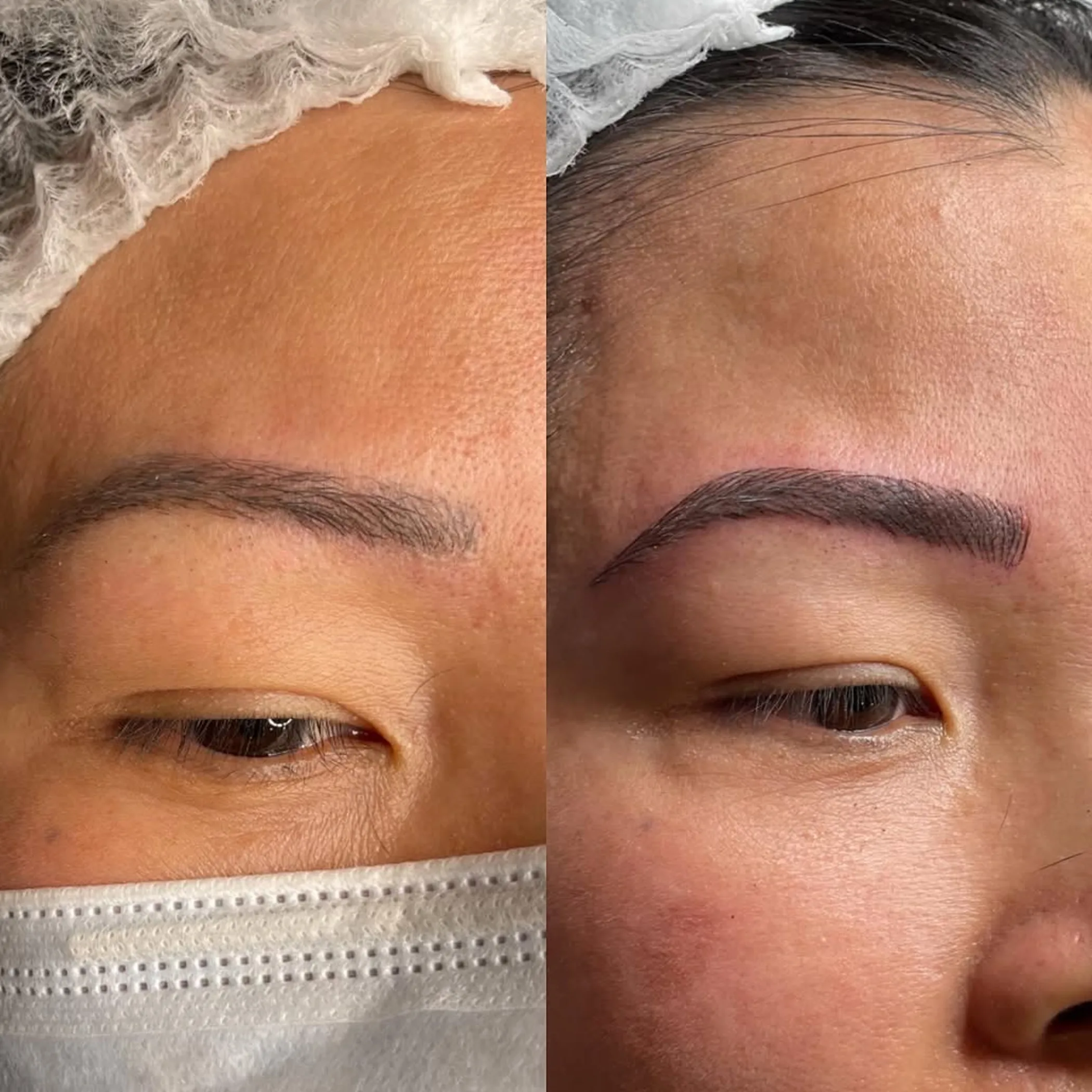
All the legalities are important, yet in plain English what the client wants is to know he is safe. Procedures put in place to engender trust ought to be of a kind that are readily documented and can be repeated at each and every appointment without difficulty.
A competent operator is more than familiar with the safety guidelines for microblading; he or she will demonstrate how those steps are reflected in the room, in the records and in what is put before the client as aftercare.
Mandatory Safety Elements
One would expect your setup to include, as an absolute minimum, hand hygiene, single-use items as the case may be, proper disposal of sharps, separation of the field, disinfection of surfaces, controls on pigment handling and the like. Add to that client screening, informed consent, written aftercare and, when it is clinically called for, a patch-test or contraindication assessment. Should you find yourself unable to give a clear account of your infection chain controls, take it as an indication the system has not been made tight enough.
Then there are age restrictions for tattoos to be had from your state or territory, particularly where the service is akin to general tattooing. Do not go by the habits of the beauty industry on this; the laws around consent and age in relation to tattooing can be more exacting.
Where To Verify Rules
My advice to any new operator is to get verification from the source before parting with money. You can have your stories in a Facebook group or take the word of a mate-of-a-mate but do not look to them for a legal sign-off. The relevant local council or state health department are where one should be looking, Access Canberra in the ACT for instance. In Queensland the Brisbane City Council might be the authority for premises approval. Make sure to ask for the rule as it pertains to cosmetic tattooing as a skin penetration procedure, not some blanket “beauty services” regulation.
Final Takeaway
In principle the regulations for microblading in Australia 2026 are straightforward if a bit fiddly to put into practice. There is no national licence for cosmetic tattoo and compliance is to be found in training, hygiene, local enforcement and the like. But then again, technique is what brings a client through the door, compliance is what leaves it open.
Adelaide Crowe would put it this way: the ones who are good at it are seldom the most flamboyant on social media. They have sensible insurance and their paperwork in order and no illusions about it. It is not glamorous but neither is an enforcement notice.
Frequently Asked Questions
How To Become A Cosmetic Tattoo Artist In Australia?
For the most part it is a matter of having the skills and recognised infection control training (HLTINF005 or its equivalent) along with a compliant premises and whatever registration the council or health department demands. There being no national pathway, one has to check the framework in the state or territory and with the local council.
What Level Of Government Determines Licensing Requirements For Beauty Services?
As a rule both. State and territory governments provide the public health framework, while the local council will be dealing with matters of inspection and registration for skin penetration premises.
Do You Need A Licence To Tattoo In Australia?
That is jurisdictional and hinges on the type of tattooing. While it may not be termed a licence in all states for cosmetic work, formal permissions such as notification or premises approval are often necessary to be on the right side of the law.
Can You Legally Tattoo From Home In Australia?
Only in so far as the planning, zoning and public health requirements are met and home-based operation is countenanced. Regulations vary and many a home setup is unsuitable for the room or property.
Which States Require Fingerprinting Or Criminal History Checks For Cosmetic Tattooists?
You need to put that to the regulator. In certain jurisdictions where body art rules are in force they can be, but do not suppose the answer will be uniform across the board for all states and services.
